Biological Hybrid Drones: Insect Muscle-Powered Aircraft

Jul 3, 2025 By

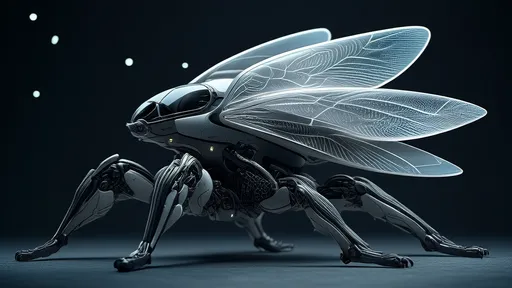
In a groundbreaking fusion of biology and engineering, researchers have successfully developed biohybrid drones powered by living insect muscles. These remarkable machines blur the line between natural organisms and artificial devices, opening new possibilities for micro-aerial vehicles that could outperform conventional drones in agility, efficiency, and environmental adaptability.

The concept of using biological components in robotics isn't entirely new, but the application of insect muscle tissue to achieve sustained flight represents a quantum leap forward. Scientists at the forefront of this technology have managed to culture and maintain dorsal-longitudinal muscles from beetles, connecting them to artificial wing structures through flexible polymer-based joints. When electrically stimulated, these muscle tissues contract and relax rhythmically, mimicking the natural wing movements observed in flying insects.

What makes this approach revolutionary is the unparalleled energy efficiency of biological muscles compared to synthetic actuators. Insect muscle tissue can produce significantly more power per unit weight than even the most advanced micro-motors while operating at a fraction of the energy cost. This efficiency breakthrough could solve one of the most persistent challenges in micro-drone design - limited flight duration due to battery constraints.

The development process hasn't been without hurdles. Maintaining living muscle tissue outside its natural biological environment requires precise control of temperature, humidity, and nutrient supply. Researchers have engineered microfluidic systems that continuously deliver oxygen and nutrients to the muscle tissues while removing metabolic waste products. These life-support systems add some weight to the drones but are offset by the superior performance of the biological actuators.

Flight control presents another fascinating challenge. Unlike conventional drones that rely on electronic speed controllers adjusting motor RPMs, biohybrid drones require a different approach. Scientists are experimenting with various stimulation patterns - adjusting the frequency, duration, and intensity of electrical pulses to precisely control wingbeat frequency and amplitude. Early prototypes demonstrate surprising maneuverability, with some capable of rapid directional changes that would be impossible for similarly sized mechanical drones.

One particularly promising aspect of this technology is its potential for self-repair. Living muscle tissue possesses natural regenerative capabilities that synthetic materials lack. Preliminary experiments show that minor damage to the muscle fibers can heal over time when provided with proper nutrients and rest periods between flights. This characteristic could significantly extend the operational lifespan of these drones in field applications.

Ethical considerations surrounding the use of biological components in robotics have sparked important discussions within the scientific community. The research teams emphasize that all muscle tissues are cultured in vitro from cell lines, not harvested directly from living insects. Strict ethical guidelines govern the development process, ensuring humane treatment of biological materials while pushing the boundaries of biohybrid technology.

The military sector has shown particular interest in these developments, envisioning stealth surveillance drones that could pass for ordinary insects. However, the applications extend far beyond defense. Environmental monitoring stands to benefit tremendously from drones that can operate silently and efficiently for extended periods. Imagine swarms of biohybrid drones tracking wildlife migrations, monitoring forest health, or sampling atmospheric conditions with minimal ecological disturbance.

Looking ahead, researchers aim to further refine the interface between biological and artificial components. Current work focuses on developing more sophisticated neural interfaces that could allow for more nuanced control of muscle contractions. Some teams are experimenting with incorporating actual insect nervous tissue to create more autonomous biohybrid systems that require less external control input.

The energy harvesting potential of these systems also warrants attention. Unlike battery-powered drones that need regular recharging, biohybrid drones could theoretically refuel themselves by metabolizing nutrients from their environment. While fully autonomous biological power sources remain in the realm of speculation, even partial implementation of this concept could revolutionize field operations.

Regulatory frameworks for biohybrid drones will need to evolve alongside the technology. Aviation authorities worldwide are beginning to discuss how to classify and regulate aircraft that incorporate living components. Unique considerations include containment protocols to prevent biological contamination and guidelines for the ethical treatment of biological materials used in robotics.

As the technology matures, cost reduction will be crucial for widespread adoption. Currently, the complex tissue culture and maintenance requirements make biohybrid drones significantly more expensive than their conventional counterparts. However, researchers anticipate that as techniques standardize and scale up, production costs will decrease to commercially viable levels.

The development of insect muscle-powered drones represents more than just a technical achievement - it challenges our fundamental understanding of the boundary between living organisms and machines. As this field progresses, it may force us to reconsider how we define both robotics and biology, potentially giving rise to entirely new categories of semi-living machines.

While still in its relative infancy, biohybrid drone technology has already demonstrated capabilities that surpass what's achievable with purely mechanical systems at small scales. The coming years will likely see rapid advancements as more research teams enter the field and cross-pollination occurs with other disciplines like synthetic biology and materials science. What began as a laboratory curiosity may soon transform entire industries that rely on aerial robotics.

The implications extend beyond practical applications to philosophical questions about our relationship with technology. As we increasingly incorporate biological components into machines, we may need to develop new ethical frameworks to guide this convergence. The success of insect muscle-powered drones could pave the way for other biohybrid systems, potentially leading to a future where the line between nature and technology becomes beautifully blurred.
Recommend Posts
Biology

Biological Hybrid Drones: Insect Muscle-Powered Aircraft

By /Jul 3, 2025

In a groundbreaking fusion of biology and engineering, researchers have successfully developed biohybrid drones powered by living insect muscles. These remarkable machines blur the line between natural organisms and artificial devices, opening new possibilities for micro-aerial vehicles that could outperform conventional drones in agility, efficiency, and environmental adaptability.
Biology

Living Robots: Regenerative Bio-entities Reprogrammed from Frog Cells

By /Jul 3, 2025

In a groundbreaking leap for regenerative biology, scientists have successfully created living robots—known as xenobots—from reprogrammed frog cells. These tiny, self-healing organisms, measuring less than a millimeter wide, blur the line between traditional robotics and organic life. Unlike conventional machines, xenobots are neither metal nor plastic but living entities designed by algorithms and assembled from biological tissue. Their creation opens a new frontier in medicine, environmental science, and our understanding of life itself.
Biology

De novo protein design: AI creates enzymes that do not exist in nature

By /Jul 3, 2025

In a groundbreaking leap for synthetic biology, researchers have harnessed artificial intelligence to design functional enzymes never before seen in nature. This achievement, published in leading scientific journals, demonstrates how machine learning algorithms can now predict protein structures with atomic-level precision and engineer novel biocatalysts for applications ranging from medicine to green chemistry. The implications are profound: scientists may soon design bespoke proteins to break down environmental pollutants, synthesize life-saving drugs, or perform industrial tasks more efficiently than naturally evolved counterparts.
Biology

Organoid Intelligence: The Computational Potential of Human Brain Chips

By /Jul 3, 2025

In a groundbreaking fusion of biology and technology, scientists are pioneering a new frontier known as "organoid intelligence" – the use of lab-grown human brain cells to perform computational tasks. This emerging field challenges our traditional understanding of computing by harnessing the innate processing power of living neural networks. Researchers believe these biological systems could eventually complement or even surpass silicon-based computers in certain applications, particularly those requiring adaptive learning and pattern recognition.
Biology

Progress in DNA Hard Drives: A Biological Solution for Storing 215PB of Data in 1 Gram

By /Jul 3, 2025

The future of data storage may reside in the very building blocks of life itself. Scientists are making remarkable strides in using DNA as an ultra-high-density storage medium, with recent breakthroughs demonstrating the ability to store 215 petabytes (215 million gigabytes) in a single gram of biological material. This astonishing density dwarfs all existing storage technologies and could revolutionize how we preserve humanity's exponentially growing digital information.
Biology

Empathetic Neurobiology: Verification of the Controversy Surrounding Mirror Neuron Networks

By /Jul 3, 2025

The field of neurobiology has long been fascinated by the concept of empathy—how humans and some animals can understand and share the emotions of others. At the heart of this discussion lies the mirror neuron system (MNS), a network of neurons first discovered in macaque monkeys in the 1990s. These neurons fire both when an individual performs an action and when they observe another performing the same action, suggesting a neural basis for imitation and, by extension, empathy. However, decades later, the role of mirror neurons in human empathy remains hotly debated.
Biology

Visual Monitoring of Brain Adenosine Accumulation as a Sleep Pressure Gauge

By /Jul 3, 2025

For decades, scientists have sought to understand the mysterious mechanisms behind sleep pressure – that undeniable urge to close our eyes when exhaustion sets in. While we've long known about adenosine's role as a biochemical marker of sleep need, researchers have now developed the first real-time visualization system for tracking adenosine accumulation in living brains.
Biology

Gut-Brain Axis Superhighway: Microbiota Electrical Signals via the Vagus Nerve

By /Jul 3, 2025

The human body operates as a vast network of interconnected systems, and one of the most fascinating highways of communication is the gut-brain axis. At the heart of this bidirectional superhighway lies the vagus nerve, a cranial nerve that serves as the primary conduit for microbial-electrical signaling between the gut and the brain. Recent research has unveiled how gut microbes influence not just digestion but also mood, cognition, and even behavior through this neural pathway.
Biology

Glial Cell Revolution: The Brain's Supporting Actors" Lead Neural Regeneration

By /Jul 3, 2025

For decades, neurons have been the undisputed stars of neuroscience research, celebrated for their electrical signaling and central role in cognition. Yet a quiet revolution is unfolding in labs worldwide as scientists uncover the astonishing capabilities of their cellular support crew – glial cells. Once dismissed as mere "brain glue," these enigmatic cells are now revealing themselves as master regulators of neurogenesis, synaptic plasticity, and neural repair.
Biology

Optogenetic Techniques for Reconstructing Fear Memory

By /Jul 3, 2025

In a groundbreaking development that blurs the line between neuroscience and futuristic technology, researchers have made significant strides in manipulating fear memories using optogenetics. This cutting-edge approach combines genetic engineering with precise light stimulation to rewrite traumatic experiences at their neural source. The implications of such memory restructuring extend far beyond laboratory experiments, potentially revolutionizing how we treat PTSD, phobias, and anxiety disorders.
Biology

Invasive Species Early Warning System: AI Tracking the Spread of Alien Species

By /Jul 3, 2025

In an era where global trade and travel have erased natural barriers between ecosystems, the silent march of invasive species poses one of the greatest unheralded threats to biodiversity. Scientists are now turning to artificial intelligence as an early-warning system against these ecological trespassers. By analyzing vast datasets—from shipping routes to social media posts—AI models can predict and track the spread of non-native species before they establish destructive footholds in new environments.
Biology

Tree Pulsar: The Millennial Climate Crisis Archive Hidden in Tree Rings

By /Jul 3, 2025

Deep within the silent rings of ancient trees lies a chronicle of our planet's climatic past, written in cellulose and time. Dendrochronologists have long understood that trees serve as nature's most meticulous archivists, recording environmental conditions with astonishing precision. The recent advancements in tree pulse monitoring technology – sophisticated devices that measure the subtle rhythms of tree growth – are revealing startling connections between historical climate patterns and our current ecological crisis.
Biology

Ant Farm Civilization: The Antibiotic Management Wisdom of Leafcutter Ants

By /Jul 3, 2025

The bustling underground metropolises of leafcutter ants have long fascinated biologists, not just for their architectural complexity but for their sophisticated agricultural practices. These tiny farmers cultivate fungal gardens, their primary food source, in a remarkable symbiosis that dates back millions of years. What’s even more astonishing is their ability to manage antibiotic use to protect their crops from parasitic infections—a feat that rivals human agricultural technology.
Biology

Fungal Climate Intervention: The Potential of Mycelial Networks to Capture Carbon Dioxide

By /Jul 3, 2025

In the shadow of climate summits and carbon credit markets, an unassuming ally emerges from the forest floor. Mycelium—the vast, subterranean neural network of fungi—has begun capturing scientific attention for its potential to rewrite our approach to carbon sequestration. Recent studies suggest these intricate fungal systems may serve as Earth's forgotten carbon sinks, operating on a scale that could complement technological solutions to atmospheric CO2 accumulation.
Biology

The Whale Pump Effect: How Deep-Sea Giants Nourish Ocean Plankton?

By /Jul 3, 2025

The ocean’s depths hide mysteries that ripple far beyond the abyss, shaping life at the surface in ways we’re only beginning to understand. Among these enigmatic processes is the whale pump—a phenomenon where leviathans of the deep ferry nutrients upward, sustaining the microscopic engines of marine ecosystems. This silent exchange between giants and plankton reveals a delicate interdependence, one that challenges our perception of the ocean’s food web.
Biology

Fossilized Genome: Coelacanth Reveals Key Mutations in Vertebrate Land Invasion

By /Jul 3, 2025

The deep-sea dwelling coelacanth, often referred to as a "living fossil," has long fascinated scientists as a relic of evolutionary history. This enigmatic fish, whose lineage dates back over 400 million years, recently yielded groundbreaking insights into one of life’s most pivotal transitions: the move of vertebrates from water to land. By sequencing and analyzing the coelacanth’s genome, researchers have uncovered key genetic mutations that may have paved the way for this dramatic leap in evolution.
Biology

Convergent Evolution Evidence: Homologous Sonar Genes in Bats and Whales

By /Jul 3, 2025

For decades, scientists have marveled at the uncanny ability of bats and toothed whales to navigate and hunt using biological sonar. Though separated by millions of years of evolution, these creatures developed strikingly similar echolocation systems independently—or so we thought. Groundbreaking research now reveals a deeper connection: shared genetic machinery underlying their acoustic superpowers.
Biology

Island Dwarfism: The Miniature Evolution Experiment from Mammoths to Hippos

By /Jul 3, 2025

Deep within the fossil records and isolated ecosystems of islands lies a curious pattern—a recurring evolutionary trend where large mainland animals shrink in size over generations when confined to island habitats. This phenomenon, known as island dwarfing, has produced some of the most bizarre and fascinating creatures in Earth’s history, from dwarf elephants to miniature hippos. The process isn’t just a quirk of nature; it’s a profound demonstration of how environmental pressures reshape life in unexpected ways.