In a groundbreaking development that blurs the line between neuroscience and futuristic technology, researchers have made significant strides in manipulating fear memories using optogenetics. This cutting-edge approach combines genetic engineering with precise light stimulation to rewrite traumatic experiences at their neural source. The implications of such memory restructuring extend far beyond laboratory experiments, potentially revolutionizing how we treat PTSD, phobias, and anxiety disorders.
The science behind this memory manipulation hinges on understanding how fear becomes biologically encoded. When we experience trauma, specific neuronal ensembles in the amygdala - the brain's fear center - form strengthened connections through a process called memory consolidation. These physical traces, known as engrams, serve as the biological basis for our fearful reactions to subsequent similar situations. Traditional therapies have attempted to weaken these connections through behavioral approaches, but optogenetics offers a more direct route to the root of the problem.
Optogenetic techniques involve genetically modifying neurons to make them light-sensitive, then using fiber-optic implants to deliver precise light pulses that can either activate or silence targeted brain cells. In landmark experiments, scientists have successfully identified the exact neural circuits responsible for specific fear memories in rodents. By stimulating these circuits with light during memory recall, researchers can essentially rewrite the emotional context of the memory while keeping its factual content intact.
One particularly remarkable study demonstrated how fear memories could be converted into positive associations. Mice that had been conditioned to fear a particular tone (through accompanying foot shocks) had their fear responses eliminated when researchers activated the original fear memory engram while providing a rewarding experience. The animals' behavioral responses to the tone completely reversed, showing preference rather than fear - all without erasing the original memory, but rather changing its emotional valence.
The precision of optogenetic manipulation offers distinct advantages over pharmacological interventions that affect the brain more broadly. Where anti-anxiety medications might dull all emotional responses, optogenetics permits surgical precision in modifying only the problematic memory traces while leaving other memories and normal fear responses intact. This specificity could prove crucial for clinical applications where preserving healthy fear responses (like avoiding real dangers) remains important.
Ethical considerations naturally arise with such powerful neurotechnology. The ability to artificially modify emotional memories touches on fundamental questions about identity and authenticity of experience. While erasing traumatic memories might relieve suffering, some argue that our memories - even painful ones - contribute to our personal narratives and growth. Researchers emphasize that current applications focus on debilitating, pathological fear responses rather than ordinary unpleasant memories.
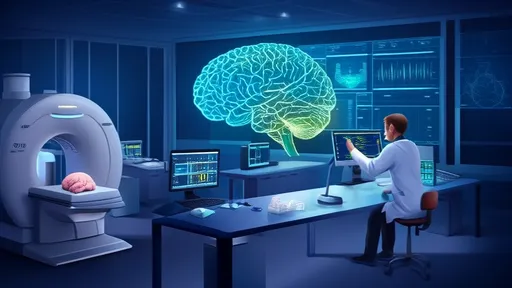
Looking toward therapeutic applications, scientists envision a multi-stage process for human treatments. First, advanced neuroimaging would identify hyperactive fear circuits in patients with PTSD or phobias. Then, temporary light-sensitive proteins could be introduced through viral vectors, allowing external light stimulation to modulate these circuits during therapy sessions. The ultimate goal isn't memory erasure but recalibration - reducing the overwhelming emotional charge while maintaining the memory's existence as a learning experience.
Technical hurdles remain before clinical use becomes feasible. Current optogenetic methods require invasive brain implants, making them impractical for widespread human application. However, researchers are developing less invasive techniques, including new viral vectors that could deliver light-sensitive proteins to specific brain areas through intravenous injection, and advanced light delivery systems that might work through the skull.
The implications extend beyond treating mental health conditions. Understanding memory manipulation at this level could lead to breakthroughs in education strategies, addiction treatment, and even the enhancement of normal cognitive functions. As research progresses, we may need to establish new ethical frameworks to govern appropriate uses of memory modification technologies while preserving the essential human experiences that shape our identities.
This revolutionary approach to memory modification represents a paradigm shift in our relationship with the past. Rather than being helplessly subject to the emotional weight of our memories, we may soon have scientifically-grounded methods to reshape traumatic experiences into manageable parts of our life stories. As optogenetic techniques advance, the boundary between treating pathology and enhancing normal function will require careful consideration by both scientists and society at large.

By /Jul 3, 2025
By /Jul 3, 2025

By /Jul 3, 2025
By /Jul 3, 2025

By /Jul 3, 2025
By /Jul 3, 2025
By /Jul 3, 2025

By /Jul 3, 2025

By /Jul 3, 2025

By /Jul 3, 2025

By /Jul 3, 2025

By /Jul 3, 2025

By /Jul 3, 2025

By /Jul 3, 2025

By /Jul 3, 2025

By /Jul 3, 2025

By /Jul 3, 2025

By /Jul 3, 2025