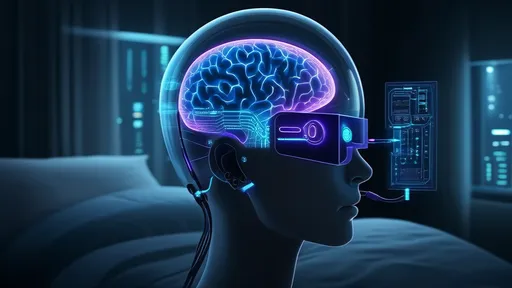
The human body operates as a vast network of interconnected systems, and one of the most fascinating highways of communication is the gut-brain axis. At the heart of this bidirectional superhighway lies the vagus nerve, a cranial nerve that serves as the primary conduit for microbial-electrical signaling between the gut and the brain. Recent research has unveiled how gut microbes influence not just digestion but also mood, cognition, and even behavior through this neural pathway.
The Vagus Nerve: A Biological Information Superhighway
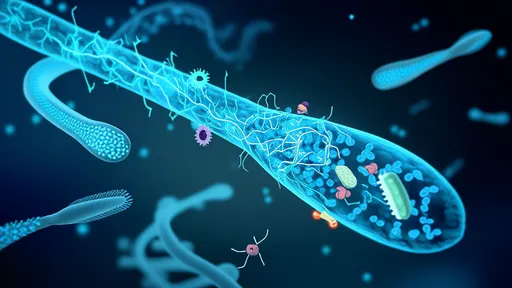
Stretching from the brainstem to the abdomen, the vagus nerve is the longest cranial nerve in the body, often referred to as the "wandering nerve" due to its extensive reach. It acts as a two-way communication channel, relaying signals between the gut and the brain at lightning speed. What makes this nerve particularly remarkable is its ability to transmit not just mechanical and chemical signals but also electrical impulses generated by gut microbiota.
Scientists have discovered that certain strains of gut bacteria produce neurotransmitters like serotonin and gamma-aminobutyric acid (GABA), which can directly stimulate the vagus nerve. These microbial metabolites trigger electrical signals that travel upward to the brain, influencing emotional states and cognitive functions. Conversely, stress or emotional distress can send signals back down the vagus nerve, altering gut motility and microbial composition—a feedback loop that underscores the deep interconnection between mind and body.
Microbial Electrics: How Gut Bacteria "Talk" to the Brain
The gut microbiome, a diverse ecosystem of trillions of microorganisms, doesn’t just passively reside in the intestines—it actively participates in shaping neural activity. Studies have shown that specific bacteria, such as Lactobacillus and Bifidobacterium, can modulate vagal tone, the measure of vagus nerve activity. Higher vagal tone is associated with better stress resilience, improved digestion, and even enhanced social behavior.
One groundbreaking study demonstrated that mice whose vagus nerves were severed no longer exhibited behavioral changes when their gut microbiomes were altered. This finding strongly suggests that the vagus nerve is essential for transmitting microbial signals to the brain. In humans, similar mechanisms are believed to play a role in conditions like anxiety, depression, and irritable bowel syndrome (IBS), where gut dysbiosis and vagal dysfunction often coexist.
Therapeutic Implications: Harnessing the Gut-Brain Connection
The growing understanding of microbial-electrical signaling has opened new avenues for treating neurological and psychiatric disorders. Vagus nerve stimulation (VNS), already an FDA-approved therapy for epilepsy and depression, may owe part of its efficacy to its modulation of gut-brain communication. Researchers are now exploring whether probiotics, prebiotics, or even fecal microbiota transplants could enhance vagal signaling to improve mental health.
In one clinical trial, patients with major depressive disorder who received a specific probiotic strain showed significant improvements in mood, alongside measurable increases in vagal tone. Another study found that mindfulness practices, which are known to stimulate the vagus nerve, led to positive shifts in gut microbiota diversity. These findings suggest that lifestyle interventions could be just as powerful as pharmaceutical approaches in optimizing the gut-brain axis.
Future Directions: Decoding the Microbial Language
While the gut-brain axis is no longer a fringe concept in science, many questions remain unanswered. How exactly do different bacterial species encode their electrical signals? Can we develop targeted "electrobiotics" to fine-tune vagal communication? And could manipulating this pathway help treat neurodegenerative diseases like Alzheimer’s or Parkinson’s?
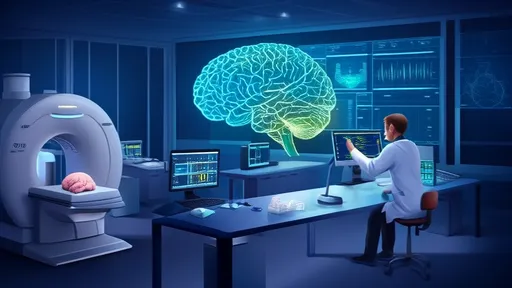
Emerging technologies, such as high-resolution neural mapping and AI-driven microbiome analysis, are poised to unravel these mysteries. Some researchers are even investigating whether gut microbes could one day be engineered to deliver precise neural signals, effectively turning the microbiome into a programmable interface between body and brain.
The vagus nerve’s role as a microbial-electrical superhighway challenges traditional boundaries between neurology, microbiology, and psychology. As science continues to decode this intricate dialogue, one thing becomes clear: the line between "gut feeling" and "brain function" is far blurrier than we ever imagined.

By /Jul 3, 2025
By /Jul 3, 2025
By /Jul 3, 2025
By /Jul 3, 2025

By /Jul 3, 2025
By /Jul 3, 2025
By /Jul 3, 2025
By /Jul 3, 2025
By /Jul 3, 2025

By /Jul 3, 2025

By /Jul 3, 2025

By /Jul 3, 2025

By /Jul 3, 2025
By /Jul 3, 2025

By /Jul 3, 2025
By /Jul 3, 2025
By /Jul 3, 2025

By /Jul 3, 2025