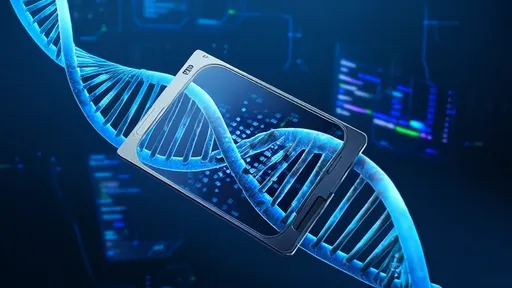
The future of data storage may reside in the very building blocks of life itself. Scientists are making remarkable strides in using DNA as an ultra-high-density storage medium, with recent breakthroughs demonstrating the ability to store 215 petabytes (215 million gigabytes) in a single gram of biological material. This astonishing density dwarfs all existing storage technologies and could revolutionize how we preserve humanity's exponentially growing digital information.
DNA: Nature's Perfect Storage Medium
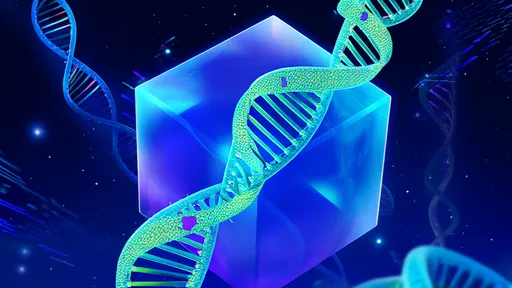
Deoxyribonucleic acid has evolved over billions of years to become nature's most efficient information storage system. The molecule's incredible data density comes from its base-pair structure - the famous A, T, C, and G nucleotides that form the rungs of DNA's double helix ladder. These four chemical "letters" can be arranged in virtually infinite combinations to encode genetic information with extraordinary compactness.
Researchers realized that this same property could be harnessed for digital data storage. Where conventional hard drives use magnetic patterns and SSDs use electrical charges to represent 1s and 0s, DNA storage uses sequences of nucleotides. A single gram of DNA can theoretically store exabytes of data - enough to hold all the world's current digital content in a space smaller than a sugar cube.
The 215 PB/Gram Milestone
Recent advances in synthetic biology and nanotechnology have transformed DNA data storage from theoretical possibility to practical reality. Teams at Harvard, the ETH Zurich, and Microsoft Research have demonstrated systems capable of achieving 215 petabytes per gram densities - approximately 100 million times more efficient than the best conventional hard drives available today.
This breakthrough was made possible by several key innovations. First, improved DNA synthesis techniques allow more precise and cost-effective writing of artificial DNA strands. Second, novel encoding algorithms have been developed to efficiently translate binary data into nucleotide sequences while building in error correction. Finally, advances in sequencing technology enable reliable reading of the stored information despite DNA's natural degradation over time.
How DNA Data Storage Works
The process begins with converting digital files from their binary format (1s and 0s) into DNA's quaternary code (A, T, C, G). Sophisticated algorithms handle this translation while adding redundancy to prevent data loss from potential sequencing errors. The designed sequences are then chemically synthesized into actual DNA molecules through automated processes.
For storage, the synthetic DNA is typically dehydrated and kept in cool, dark conditions where it can remain stable for centuries - unlike magnetic tapes or optical media that degrade within decades. When the data needs to be retrieved, the DNA is rehydrated and sequenced using next-generation sequencing technology. The raw nucleotide data is then decoded back into the original digital format using specialized software.
Overcoming Technical Challenges
While the potential is enormous, significant hurdles remain before DNA storage becomes practical for widespread use. The primary bottleneck is cost - synthesizing custom DNA strands remains expensive, though prices have been dropping exponentially. Current estimates suggest about $1,000 to store 1MB of data, making it prohibitive for all but the most critical archival purposes.
Access speed presents another challenge. While DNA excels at long-term storage density, reading and writing data is much slower than electronic memory. It can take hours to retrieve information from DNA compared to milliseconds for conventional storage. This makes the technology better suited for "cold storage" of rarely accessed data rather than active computing needs.
Real-World Applications Emerging
Despite these limitations, organizations are already experimenting with DNA storage for specialized applications. Microsoft has stored everything from classic films to entire books in DNA, while the Arch Mission Foundation has encoded Wikipedia pages in synthetic DNA as part of their "Lunar Library" project aiming to preserve human knowledge off-world.
Government agencies and scientific organizations are particularly interested in DNA's potential for ultra-long-term archival storage. Unlike digital formats that become obsolete every few years, DNA reading technology will always be relevant because of its fundamental role in biology. Properly stored DNA could keep data intact for thousands of years without needing periodic migration to new formats.
The Future of Biological Data Storage
As research continues, experts predict DNA storage could become economically viable for enterprise use within the next decade. Startups like Catalog and Molecular Assemblies are working to commercialize the technology, developing automated systems that could eventually make DNA storage as routine as using cloud services today.
Looking further ahead, some envision hybrid systems where DNA provides massive archival capacity while conventional storage handles frequent access needs. There's even speculation about future "wet computers" that might process information directly in biological molecules, blurring the line between information technology and biotechnology.
The 215 PB/gram achievement marks a significant milestone in humanity's quest to keep pace with the data deluge of the digital age. As we generate ever more information - from scientific research to cultural artifacts - DNA may provide the only viable solution for preserving our digital legacy for future generations in an increasingly data-driven world.
By /Jul 3, 2025
By /Jul 3, 2025
By /Jul 3, 2025
By /Jul 3, 2025
By /Jul 3, 2025
By /Jul 3, 2025
By /Jul 3, 2025
By /Jul 3, 2025
By /Jul 3, 2025
By /Jul 3, 2025
By /Jul 3, 2025
By /Jul 3, 2025
By /Jul 3, 2025
By /Jul 3, 2025

By /Jul 3, 2025
By /Jul 3, 2025
By /Jul 3, 2025
By /Jul 3, 2025