Geothermal Power 2.0: The Revolution of Supercritical CO2 Turbines

Jul 9, 2025 By

The energy sector is on the cusp of a transformative leap as geothermal power generation enters its next evolutionary phase. At the heart of this revolution lies an unexpected protagonist: supercritical carbon dioxide (sCO₂). What was once considered a problematic greenhouse gas is now emerging as the key to unlocking geothermal energy's full potential, thanks to groundbreaking advances in turbine technology.

For decades, geothermal power plants have relied on conventional steam turbines to convert Earth's heat into electricity. While effective, these systems face inherent limitations in efficiency, scalability, and geographical flexibility. The introduction of sCO₂ turbines promises to shatter these barriers, offering a technological paradigm shift that could make geothermal energy competitive with fossil fuels in ways previously unimaginable.

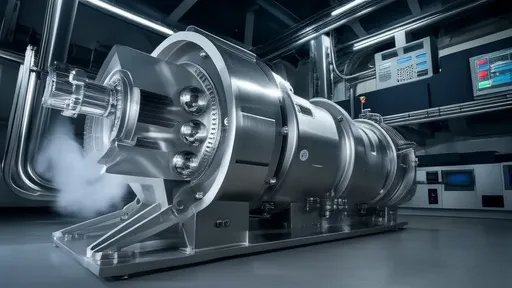
The physics behind supercritical CO₂ provides the foundation for this breakthrough. When carbon dioxide is heated above 31°C and pressurized beyond 73 atmospheres, it enters a supercritical state exhibiting properties of both liquid and gas. This peculiar phase allows sCO₂ to carry significantly more energy than steam while flowing with less resistance through turbine systems. The result? Smaller, more efficient power generation units that can extract more electricity from lower-temperature heat sources.

Traditional geothermal plants require underground reservoirs of water heated above 150°C to produce sufficient steam for power generation. The sCO₂ turbines, by contrast, can operate efficiently at temperatures as low as 80°C. This dramatically expands potential geothermal development areas, potentially enabling economical power generation in regions previously considered geothermally marginal.

What makes the sCO₂ approach truly revolutionary is its closed-loop design. Unlike conventional systems that constantly consume water, these new turbines recirculate the same CO₂ indefinitely. The gas never contacts the atmosphere during normal operations, making the process carbon-neutral. This addresses two critical environmental concerns simultaneously: reducing water usage in energy production while preventing additional greenhouse gas emissions.

The compact nature of sCO₂ turbine systems opens surprising possibilities for geothermal deployment. A unit capable of powering several thousand homes could fit inside a standard shipping container, allowing for modular plant designs that can be scaled according to need. This portability factor could prove particularly valuable for remote communities and industrial applications where traditional power infrastructure remains impractical or prohibitively expensive.

Several pilot projects across the globe are already demonstrating the technology's viability. In the United States, the Department of Energy has partnered with private firms to test sCO₂ geothermal systems in various geological settings. Early results suggest efficiency improvements of 20-30% over conventional geothermal plants, with corresponding reductions in both physical footprint and levelized energy costs.

The implications extend beyond just cleaner electricity generation. sCO₂ turbines could potentially revolutionize how we think about industrial waste heat recovery. Manufacturing facilities, data centers, and other thermal-intensive operations might install these systems to convert their excess heat into additional power, creating new revenue streams while improving overall energy efficiency.

Technical challenges remain before widespread adoption can occur. Materials science represents a particular hurdle, as the high pressures and temperatures involved require innovative alloys and composites that can withstand extreme conditions over decades of continuous operation. Researchers are exploring various nickel-based superalloys and ceramic coatings that show promise in meeting these demanding specifications.

The economic case for sCO₂ geothermal continues to strengthen as the technology matures. Projections suggest that within a decade, these systems could deliver electricity at costs competitive with natural gas plants while offering the reliability and sustainability advantages of renewable energy. This economic viability, combined with growing policy support for clean energy solutions, is attracting significant investment from both traditional energy companies and venture capital firms.

Perhaps most exciting is the potential synergy between sCO₂ geothermal and other emerging technologies. The same turbine designs could theoretically be adapted for concentrated solar power applications or even advanced nuclear reactor cooling systems. Such cross-pollination of clean energy technologies could accelerate the global transition away from fossil fuels more rapidly than any single solution working in isolation.

As climate change concerns intensify and nations scramble to meet ambitious decarbonization targets, geothermal 2.0 arrives at a critical moment. The sCO₂ turbine revolution represents more than just an incremental improvement in renewable energy technology—it offers a fundamentally new approach to harnessing Earth's natural heat that could reshape our energy landscape for generations to come.

The coming years will prove decisive as researchers refine designs, engineers tackle material challenges, and early adopters demonstrate real-world performance. One thing appears certain: the marriage of geothermal energy with supercritical CO₂ technology marks the beginning of an exciting new chapter in humanity's quest for sustainable power.
Recommend Posts
Science

Wave Energy Farms: Stable Power Generation Amidst Ocean Turbulence

By /Jul 9, 2025

The restless ocean has always been a source of both awe and untapped potential. For centuries, humans have harnessed wind and solar energy, but the rhythmic rise and fall of waves remained an elusive power source—until now. Wave energy farms are emerging as a groundbreaking solution to extract electricity from the sea's perpetual motion, offering a stable and predictable renewable energy source amidst the growing demand for clean power.
Science

Geothermal Power 2.0: The Revolution of Supercritical CO2 Turbines

By /Jul 9, 2025

The energy sector is on the cusp of a transformative leap as geothermal power generation enters its next evolutionary phase. At the heart of this revolution lies an unexpected protagonist: supercritical carbon dioxide (sCO₂). What was once considered a problematic greenhouse gas is now emerging as the key to unlocking geothermal energy's full potential, thanks to groundbreaking advances in turbine technology.
Science

Evolution of Behavioral Patterns in Virtual World for Embodied Intelligence

By /Jul 9, 2025

The concept of embodied intelligent agents evolving behavioral patterns within virtual environments represents a fascinating frontier in artificial intelligence and computational neuroscience. Unlike traditional AI systems that operate in abstract, disembodied frameworks, these agents interact with digital worlds through simulated physical forms, allowing for more nuanced and adaptive learning processes. This paradigm shift is reshaping how researchers approach machine learning, cognitive modeling, and even our understanding of biological intelligence.
Science

Machine Learning Feedback: AI Guides Human Scientists in Designing Experiments

By /Jul 9, 2025

In a groundbreaking shift that redefines the traditional boundaries between human intuition and machine intelligence, artificial intelligence systems are now actively guiding scientists in designing experiments. This emerging paradigm, often referred to as "machine learning feedback loops," represents a significant leap forward in how research is conducted across disciplines ranging from molecular biology to materials science. The implications are profound: AI is no longer just a tool for analyzing data but has become a collaborative partner in the creative process of scientific discovery.
Science

Edge Computing Intelligence: Autonomous Ecological Monitoring Stations in the Desert

By /Jul 9, 2025

The vast and unforgiving deserts of the world have long been considered barren wastelands, but beneath their harsh exteriors lie fragile ecosystems that require careful observation. Traditional ecological monitoring methods, reliant on manual data collection and centralized processing, often fall short in these remote and extreme environments. However, a new wave of innovation is emerging—autonomous ecological monitoring stations powered by edge computing intelligence. These self-sustaining units are transforming how scientists study desert ecosystems, providing real-time insights while operating independently in some of the planet's most isolated regions.
Science

Unsupervised Learning Breakthrough: AI Discovers New Material Laws Autonomously

By /Jul 9, 2025

In a groundbreaking development that could reshape materials science, artificial intelligence has independently discovered new physical laws without human supervision. Researchers at the Massachusetts Institute of Technology (MIT) have demonstrated how machine learning algorithms can uncover fundamental relationships in material behavior that had eluded scientists for decades. This achievement marks a significant leap forward in autonomous scientific discovery and opens unprecedented possibilities for accelerating research across multiple disciplines.
Science

Physical Neural Networks: A New AI Architecture Simulating Natural Laws

By /Jul 9, 2025

In the rapidly evolving field of artificial intelligence, researchers are increasingly turning to the natural world for inspiration. The latest breakthrough comes in the form of physics-inspired neural networks, a novel architecture that seeks to emulate the fundamental laws governing our universe. This approach represents a significant departure from traditional deep learning models, offering tantalizing possibilities for solving complex real-world problems.
Science

Vagus Nerve Stimulation: Electrical Signals for Treating Chronic Inflammation

By /Jul 9, 2025

Chronic inflammation has long been a formidable adversary in modern medicine, implicated in diseases ranging from rheumatoid arthritis to cardiovascular disorders. Traditional treatments often rely on pharmaceuticals that come with a host of side effects. But what if the body’s own electrical wiring could be tapped to control inflammation? Emerging research into vagus nerve stimulation (VNS) suggests this might not only be possible but could revolutionize how we treat inflammatory conditions.
Science

Senescent Cell Clearance Agents: Cellular Therapies for Extending Healthy Lifespan

By /Jul 9, 2025

The quest for longevity has entered a fascinating new phase with the emergence of senolytic therapies—treatments designed to selectively eliminate aging cells. These "zombie cells," known scientifically as senescent cells, accumulate in tissues as we age, secreting harmful inflammatory factors that contribute to age-related diseases. Researchers now believe that targeting these cells could not only extend lifespan but, more importantly, dramatically improve healthspan—the period of life free from chronic illness and disability.
Science

Nucleic Acid Nanorobots: Precise Drug Delivery's Molecular Transport Team

By /Jul 9, 2025

The realm of medical science is witnessing a groundbreaking revolution with the advent of nucleic acid nanorobots—a fleet of molecular transporters designed to deliver drugs with unprecedented precision. These tiny yet sophisticated machines, constructed from the very building blocks of life, are poised to redefine targeted therapy, offering hope for treating diseases at their root with minimal side effects.
Science

Organ-on-a-Chip Consortium: Miniature Laboratories of Human Systems

By /Jul 9, 2025

The Organ-on-a-Chip (OoC) Consortium represents a groundbreaking frontier in biomedical research, where miniature models of human organs are engineered to replicate the complexities of living systems. These microphysiological platforms are transforming how scientists study disease mechanisms, test drug efficacy, and evaluate toxicity—all while reducing reliance on animal testing. By mimicking the structural and functional nuances of human tissues, these chips offer an unprecedented window into human biology at a fraction of the scale.
Science

Mitochondrial Transplantation: A New Hope for Treating Neurodegenerative Diseases

By /Jul 9, 2025

In the relentless pursuit of effective treatments for neurodegenerative diseases, scientists have turned their attention to an innovative approach that targets the very powerhouses of our cells - the mitochondria. Mitochondrial transplantation, a groundbreaking therapeutic strategy, is emerging as a beacon of hope for conditions like Alzheimer's, Parkinson's, and ALS that have long eluded definitive cures.
Science

Bionic Nacre: 3D-Printed Fracture Repair Armor

By /Jul 9, 2025

In a groundbreaking fusion of biology and engineering, researchers have developed 3D-printed fracture repair armor inspired by the remarkable structure of nacre, or mother-of-pearl. This innovative approach promises to revolutionize orthopedic medicine by offering stronger, more flexible, and biocompatible solutions for bone fractures. The natural world has once again provided a blueprint for human innovation, with the layered, brick-and-mortar architecture of seashells guiding the design of next-generation medical implants.
Science

Boronene Breakthrough: A Stronger 2D Conductor Than Graphene

By /Jul 9, 2025

The world of two-dimensional materials has witnessed a groundbreaking development with the recent advancements in borophene applications. Dubbed as the "stronger cousin of graphene," this atomically thin material is demonstrating exceptional electrical conductivity and mechanical properties that could redefine multiple industries. Researchers now believe borophene may overcome several limitations that have hindered graphene's widespread commercial adoption.
Science

Liquid Metal Robot: Reconfigurable Soft Actuator

By /Jul 9, 2025

In a groundbreaking leap for robotics, researchers have unveiled a new class of actuators powered by liquid metal alloys—materials that blur the line between solid and fluid. These reconfigurable soft actuators promise to revolutionize everything from medical devices to search-and-rescue robots, offering unprecedented flexibility and adaptability. Unlike traditional rigid components, these systems can morph their shape dynamically, enabling movements that were once the exclusive domain of science fiction.
Science

Aerogel Metamaterials: Insulation Guardians from -100°C to 3000°C

By /Jul 9, 2025

In the realm of advanced materials science, aerogel metamaterials have emerged as a revolutionary solution for extreme thermal insulation. These nanostructured wonders defy conventional limitations, creating an invisible shield against temperatures ranging from cryogenic -100°C to blistering 3000°C. Unlike traditional insulation materials that rely on bulk or density, aerogels achieve their remarkable properties through carefully engineered nanoscale architectures.
Science

Self-Healing Concrete: Smart Building Materials for Crack Repair by Microorganisms

By /Jul 9, 2025

The construction industry is undergoing a quiet revolution with the emergence of self-healing concrete, a groundbreaking material that promises to extend the lifespan of infrastructure while reducing maintenance costs. At the heart of this innovation lies an unlikely hero: microorganisms capable of repairing cracks autonomously. This bio-concrete represents a paradigm shift in how we think about building materials, blending biology with engineering to create structures that can literally heal themselves.
Science

Urban Ecological Corridors: Sky Green Bridges for Wildlife

By /Jul 9, 2025

In the heart of our bustling cities, a quiet revolution is taking place—one that bridges the gap between urban development and wildlife conservation. Cities around the world are increasingly adopting an innovative solution to habitat fragmentation: ecological corridors, often referred to as "green bridges" or "wildlife overpasses." These structures, draped in lush vegetation, stretch across highways and urban sprawls, offering safe passage to animals and reconnecting fragmented ecosystems. It’s a testament to humanity’s growing awareness of its shared space with nature.