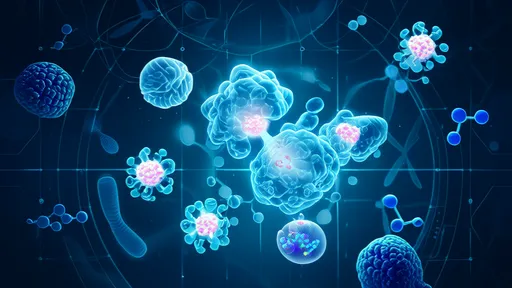
The realm of medical science is witnessing a groundbreaking revolution with the advent of nucleic acid nanorobots—a fleet of molecular transporters designed to deliver drugs with unprecedented precision. These tiny yet sophisticated machines, constructed from the very building blocks of life, are poised to redefine targeted therapy, offering hope for treating diseases at their root with minimal side effects.
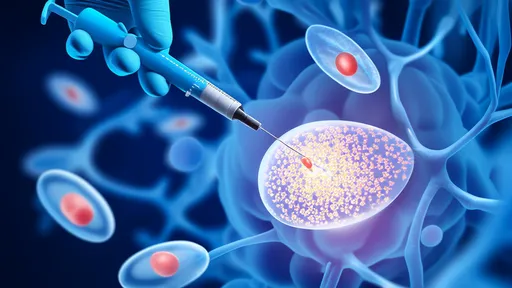
At the heart of this innovation lies the ability of nucleic acids—DNA and RNA—to self-assemble into intricate nanostructures. Scientists have harnessed this property to engineer nanorobots capable of navigating the complex terrain of the human body. Unlike traditional drug delivery systems, which often rely on passive diffusion, these molecular transporters are programmed to seek out specific cells or tissues, releasing their therapeutic payload only when triggered by precise biological cues.
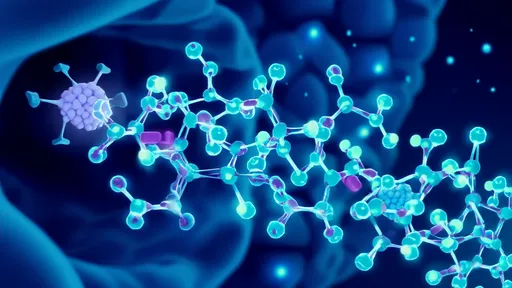
The design of nucleic acid nanorobots is a marvel of bioengineering. By folding DNA or RNA strands into precise shapes, researchers create structures with cavities or binding sites that can carry drugs, proteins, or even genetic material. Some designs incorporate "aptamers," short nucleic acid sequences that act like homing devices, binding selectively to markers on diseased cells. Others use enzymatic components to perform tasks such as cutting harmful DNA or synthesizing therapeutic molecules on demand.
What sets these nanorobots apart is their responsiveness to environmental signals. For instance, a nanorobot might remain inert until it encounters a tumor's acidic microenvironment or a specific protein overexpressed in diseased tissue. This level of control minimizes collateral damage to healthy cells—a persistent challenge in chemotherapy and other systemic treatments. Early studies have demonstrated their potential in cancer therapy, where they’ve successfully delivered cytotoxic agents directly to malignant cells while sparing surrounding tissue.
The implications extend far beyond oncology. Nucleic acid nanorobots could revolutionize the treatment of genetic disorders by delivering gene-editing tools like CRISPR-Cas9 to precise locations in the genome. In autoimmune diseases, they might be programmed to deactivate rogue immune cells without suppressing the entire immune system. Researchers are even exploring their use in regenerative medicine, where they could guide stem cells to repair damaged organs or tissues.
Despite their promise, significant hurdles remain. The stability of nucleic acid nanostructures in the bloodstream is a critical concern, as enzymes can degrade them before they reach their target. Scientists are addressing this by chemically modifying the nucleic acids or encapsulating them in protective coatings. Another challenge is scaling up production—while lab-scale synthesis is feasible, manufacturing these nanorobots at clinical-grade quantities requires further innovation.
Ethical considerations also come into play. As with any emerging technology, the potential misuse of programmable nanorobots raises questions about safety and oversight. Regulatory frameworks will need to evolve alongside the technology to ensure its responsible development and deployment. Public understanding and acceptance will be equally important, as the idea of microscopic robots circulating in the body may initially evoke unease.
Looking ahead, the convergence of nucleic acid nanotechnology with advances in artificial intelligence and robotics could unlock even more sophisticated functionalities. Imagine nanorobots that not only deliver drugs but also diagnose diseases in real time, adapt their behavior based on changing conditions, or communicate with external devices to provide continuous health monitoring. Such capabilities would blur the line between therapy and diagnostics, ushering in an era of truly personalized medicine.
The journey from laboratory benches to clinical practice will undoubtedly be long and complex, but the progress so far is electrifying. With each breakthrough, nucleic acid nanorobots are inching closer to becoming the molecular transport fleet that medicine has long envisioned—a fleet that navigates the human body with the precision of a guided missile and the gentleness of a healing touch.

By /Jul 9, 2025

By /Jul 9, 2025

By /Jul 9, 2025

By /Jul 9, 2025

By /Jul 9, 2025

By /Jul 9, 2025

By /Jul 9, 2025

By /Jul 9, 2025
By /Jul 9, 2025
By /Jul 9, 2025

By /Jul 9, 2025
By /Jul 9, 2025
By /Jul 9, 2025

By /Jul 9, 2025

By /Jul 9, 2025
By /Jul 9, 2025

By /Jul 9, 2025

By /Jul 9, 2025