The restless ocean has always been a source of both awe and untapped potential. For centuries, humans have harnessed wind and solar energy, but the rhythmic rise and fall of waves remained an elusive power source—until now. Wave energy farms are emerging as a groundbreaking solution to extract electricity from the sea's perpetual motion, offering a stable and predictable renewable energy source amidst the growing demand for clean power.
The Promise of Wave Energy
Unlike solar or wind energy, which depend on weather conditions, wave energy is remarkably consistent. The ocean’s surface is in near-constant motion, driven by winds, tides, and lunar gravitational pull. This ceaseless movement translates into a dense and reliable energy resource. Experts estimate that if fully utilized, wave energy could supply a significant portion of global electricity demand, particularly for coastal nations.
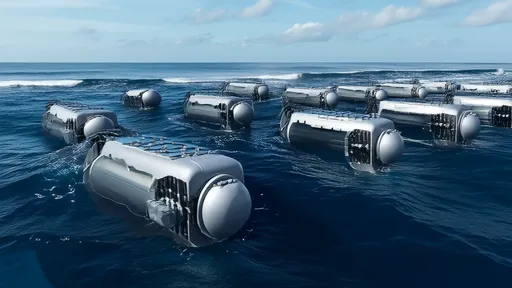
Wave energy converters (WECs) are the backbone of this technology. These devices come in various designs—some float on the surface, bobbing with the waves, while others are submerged, capturing energy from water pressure changes. The diversity in WEC designs reflects the adaptability required to harness the ocean’s power efficiently, depending on wave height, frequency, and coastal geography.
Overcoming the Challenges of the Sea
Harnessing wave energy is not without its hurdles. The ocean is a harsh environment—corrosive saltwater, violent storms, and biofouling (the accumulation of marine organisms on equipment) pose significant engineering challenges. Early prototypes often succumbed to these conditions, but advancements in materials science have led to more resilient designs. Stainless steel alloys, anti-corrosive coatings, and modular systems that can be easily maintained are making wave energy farms more viable.
Another obstacle is energy transmission. Unlike wind or solar farms, which are often located on land or near shore, wave energy farms are typically situated farther out at sea where waves are more powerful. Transmitting electricity over long distances underwater requires robust cabling and infrastructure, adding to the cost. However, innovations in high-voltage direct current (HVDC) transmission are helping to mitigate these losses.
Global Pioneers Leading the Charge
Several countries are at the forefront of wave energy development. Scotland, with its rugged coastline and strong Atlantic waves, hosts the European Marine Energy Centre (EMEC), a testing ground for wave and tidal energy devices. Australia’s Carnegie Clean Energy has deployed the CETO system, which uses submerged buoys to generate power. Meanwhile, Portugal’s Aguçadoura Wave Farm became the world’s first commercial wave energy project, albeit short-lived, proving that utility-scale wave energy is within reach.
The United States is also making strides, particularly on the West Coast, where the Pacific Ocean’s powerful swells offer ideal conditions. The Naval Facilities Engineering Command (NAVFAC) has invested in wave energy projects to power remote military bases, demonstrating the technology’s potential for off-grid applications.
Environmental and Economic Impacts
Wave energy is often touted as one of the cleanest renewable sources, with minimal visual and ecological footprint compared to wind turbines or solar panels. However, concerns remain about its impact on marine ecosystems. The noise and physical presence of WECs could disrupt marine life, particularly migratory species. Researchers are conducting extensive studies to ensure that wave energy farms coexist harmoniously with ocean biodiversity.
Economically, wave energy is still in its infancy, with higher upfront costs than established renewables. Yet, as technology matures and economies of scale come into play, costs are expected to drop. Governments and private investors are increasingly recognizing the long-term benefits, offering subsidies and grants to accelerate development.
The Future of Wave Energy Farms
The next decade could see wave energy transition from experimental projects to a mainstream energy source. Hybrid systems that combine wave, wind, and solar energy are being explored to maximize efficiency. Smart grid integration and energy storage solutions will further enhance reliability, ensuring that the power generated from waves can meet demand even during calm periods.
As climate change intensifies, the need for diverse and resilient renewable energy sources becomes more urgent. Wave energy farms, with their ability to provide stable power from the ocean’s endless motion, may well become a cornerstone of the global energy transition. The sea, once a formidable frontier, is now poised to be one of humanity’s greatest allies in the quest for sustainability.
By /Jul 9, 2025
By /Jul 9, 2025

By /Jul 9, 2025

By /Jul 9, 2025
By /Jul 9, 2025

By /Jul 9, 2025

By /Jul 9, 2025

By /Jul 9, 2025

By /Jul 9, 2025

By /Jul 9, 2025

By /Jul 9, 2025

By /Jul 9, 2025

By /Jul 9, 2025

By /Jul 9, 2025

By /Jul 9, 2025
By /Jul 9, 2025

By /Jul 9, 2025

By /Jul 9, 2025